Assessing Your Farming Operations: Beyond Acreage
Choosing the right tractor for your 10-acre farm isn't solely about acreage; it's about aligning your machinery with your farming practices and long-term goals. Before considering horsepower or brands, comprehensively analyze your operation. What crops will you cultivate? Will you raise livestock? What soil type dominates your land? Understanding these factors guides your machinery selection. Heavy clay soil requires more powerful equipment than lighter, sandy loam.
For larger operations, consider exploring used utility tractors; check out used utility tractors.
"The type of soil is crucial," says Dr. Emily Carter, Agricultural Engineer at Cornell University. "Heavy clay demands significantly more power, impacting tractor choice and fuel efficiency."
For instance, intensive vegetable farming demands maneuverability, prioritizing sub-compact tractors, while a mixed operation with livestock might necessitate a more powerful compact model. Consider your future plans; will your farm expand? If so, a slightly larger tractor could be a sound long-term investment. Planning for future growth prevents premature upgrades.
Tractor Types and Horsepower: Finding the Right Fit
Tractors come in various sizes, each suited to different tasks and acreage. For a 10-acre farm, the most suitable options are typically:
- Sub-compact tractors (15-25 horsepower): Ideal for small gardens and light tasks, offering excellent maneuverability but limited power. They are cost-effective but lack the versatility of larger models.
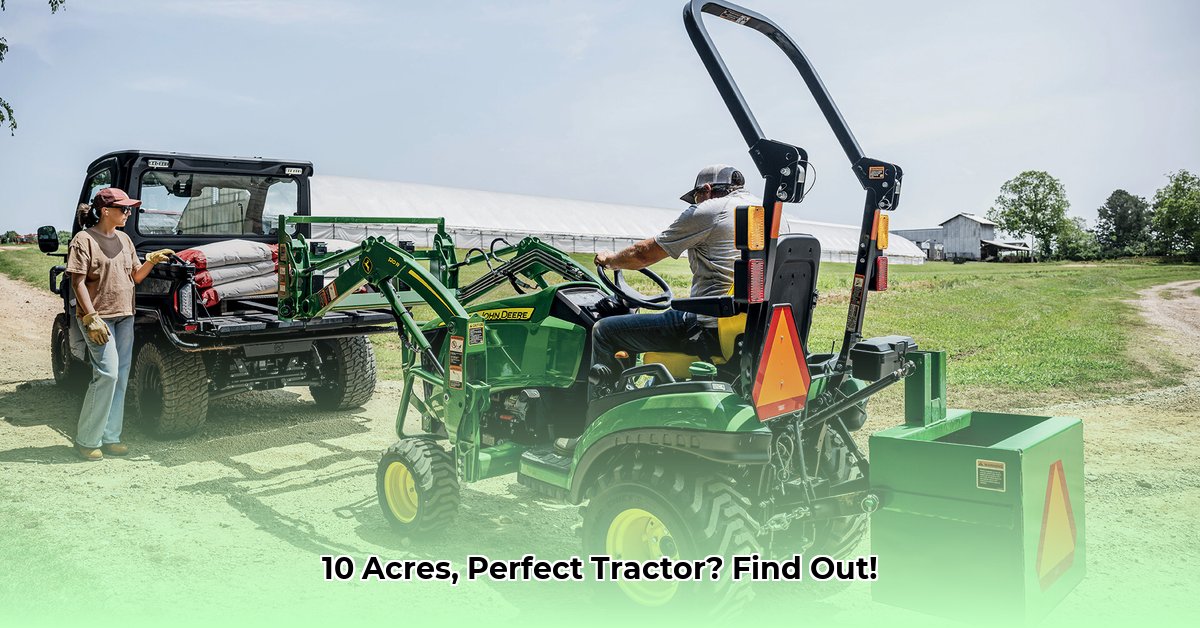
- Compact tractors (20-40 horsepower): A popular choice for 10-acre farms, balancing power and maneuverability. They handle diverse tasks efficiently, striking a balance between cost and performance.
- Utility tractors (40-100 horsepower): Overkill for most 10-acre farms unless you have ambitious plans or diverse, heavy-duty operations. They are powerful but expensive to operate and maintain.
Horsepower isn't the only factor. Three-point hitches (systems for attaching implements) and lifting capacity are equally crucial. Ensure your chosen tractor can effectively handle the implements you need. Remember that larger engines don't always mean more efficient operation. Fuel consumption and maintenance costs must be considered.
Choosing Implements: Essential Tools for Efficiency
The tractor is only part of the equation; selecting appropriate implements is essential for maximizing productivity and efficiency. A three-point hitch is standard, enabling attachment of various implements like tillers, mowers, and loaders. Ensure compatibility before purchasing. Will you need a tiller for soil preparation, a mower for pasture maintenance, or a loader for material handling? Planning ahead prevents future equipment purchases and ensures seamless workflow. Consider your needs, both present and future. High-quality implements minimize repair costs and extend operational life.
Sustainability Considerations: Farming Responsibly
Sustainable practices should be paramount. Smaller tractors generally consume less fuel and produce fewer emissions. This translates to lower running costs and a reduced environmental impact. They also minimize soil compaction, preserving soil health, crucial for long-term fertility. The incorporation of no-till farming techniques further enhances sustainability, minimizing fuel use and soil disturbance. This helps conserve soil moisture, reduces erosion, and promotes biodiversity.
Budgeting and Financing: A Long-Term Perspective
Tractors are substantial investments. Consider the purchase price, fuel costs, maintenance, and potential repairs. New tractors are expensive, but used models offer savings, though they may require more repairs. Carefully weigh the trade-offs. Financing options such as loans and leases offer flexibility. Compare terms and interest rates; don't solely focus on monthly payments – examine the total cost, including interest.
Real-World Examples: Learning from Experienced Farmers
Before making a decision, connect with local farmers. Attend farm shows, visit farms, and discuss tractor choices with those operating on similar acreage. Their insights offer invaluable information on model suitability, hidden costs, and maintenance requirements. Learning from their experience saves you time, money, and potential headaches.
Decision Matrix: Comparing Your Options
| Tractor Type | Horsepower Range | Pros | Cons | Suitability for 10 Acres |
|---|---|---|---|---|
| Sub-Compact | 15-25 | Affordable, maneuverable, fuel-efficient | Limited power, fewer implement options | Small gardens, light tasks |
| Compact | 20-40 | Versatile, good balance of power and size | Higher purchase price than sub-compact | Most 10-acre farms, diverse operations |
| Utility | 40-100 | Powerful, wide range of implement choices | High initial cost, higher fuel consumption, larger | Intensive operations, potential future expansion |
Remember, the ideal tractor is the one that best suits your specific needs and long-term goals. Don't rush the decision; thorough research guarantees a sustainable and productive farming operation.